Water damage
Water damage restoration in Castle Rock, Colorado
Restoration is a sequence: stop the water, remove what is standing, dry the structure, then repair what could not be saved. The order matters.
Calling early helps.
Stopping the source comes first
Nothing dries while water is still arriving. For a supply line, that means the main shutoff inside the house. The Town of Castle Rock tells residents to use the valve near the meter, not the one at the street.
For roof or window leaks, the contractor may tarp the opening so the structure can start to dry.
Measuring before and during drying
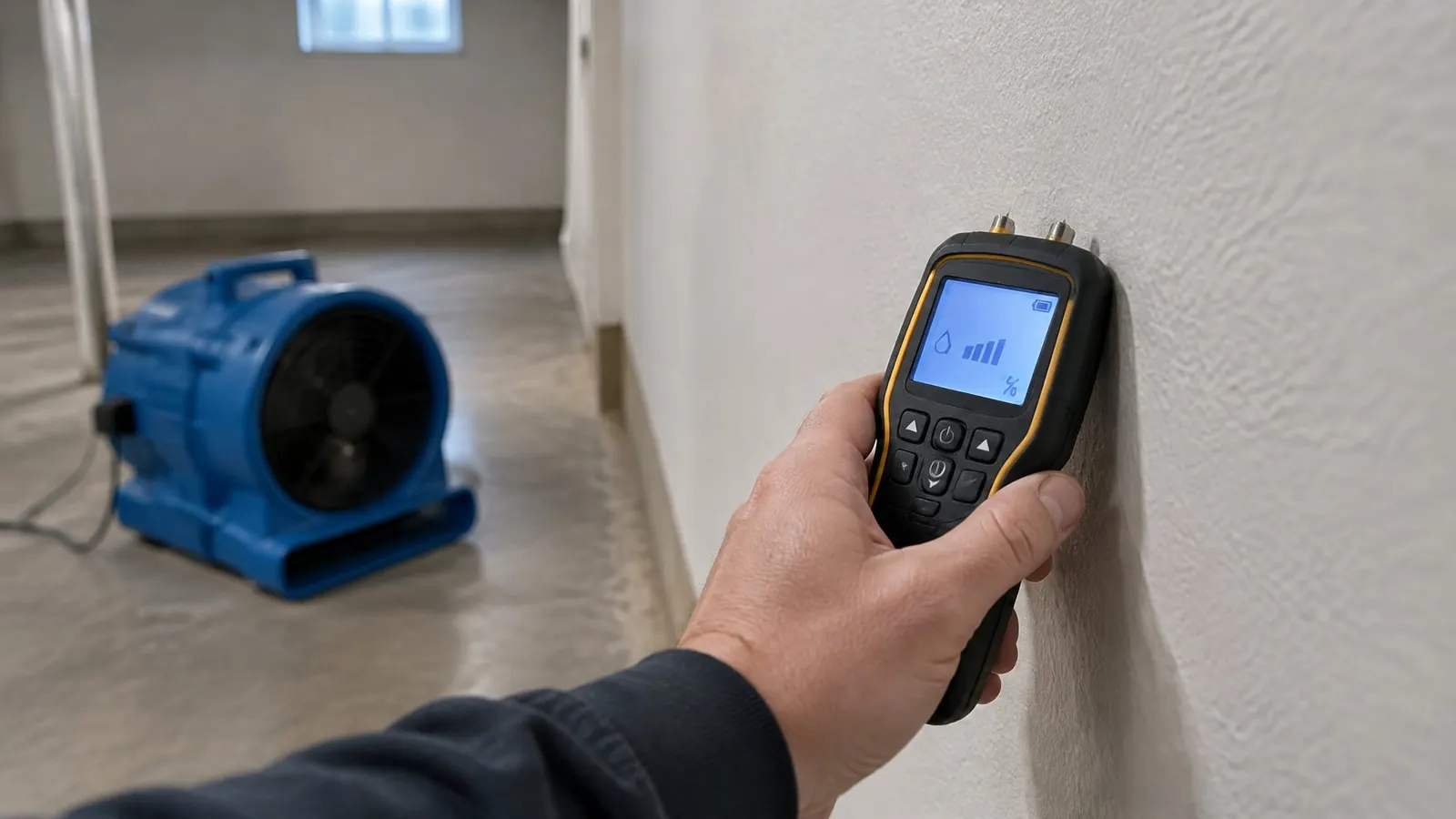
A moisture meter reads how wet drywall, framing and flooring are. Readings taken on the first visit and again as drying proceeds show whether the equipment is working or the wall still holds water.
Ask the contractor to share those numbers. They are also useful to an insurance adjuster.

Drying equipment, then repairs
Air movers push dry air across wet surfaces and dehumidifiers pull the moisture out of the room. Material that cannot be dried, such as saturated carpet pad, is removed.
Rebuilding, painting and flooring are separate from drying. Some restoration contractors do both and some only dry.
What affects how long and how involved it gets
- Source of the water
- Clean supply water behaves differently from drain water or storm water. See the sewage page for the second kind.
- How long it sat
- The EPA advises drying wet materials within 24 to 48 hours to keep mold from starting.
- Materials involved
- Drywall, carpet, pad, hardwood and insulation each dry or fail differently.
- Size of the area
- More wet square footage means more equipment and more days of drying.
Water is spreading. Call now.
The call goes to an independent restoration contractor who serves Douglas County. Calling early matters because wet drywall and subfloor start to break down quickly.